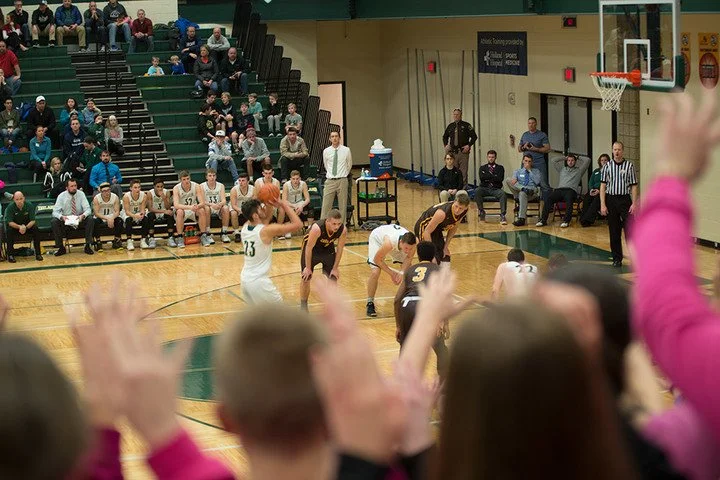
Community Starts With Sport
How we built a brand strategy at VNN and rSchoolToday around the idea that local school sports can make communities stronger and scaled our business from 300 to 14,000+ US high school clients.
There was a simple observation at the heart of the brand strategy I developed at VNN, formerly Varsity News Network:
Sports are powerful because they give a community a reason to come together.
We called the campaign Community Starts with Sport.
It became the foundation for how we thought about the brand, the product, partnerships, content, advertising and even the metrics we used to measure success.
I developed the brand strategy and campaign while serving as CMO at VNN, working across brand, product, sales, partnerships and content to turn the idea into an operating principle for the business.
It’s a great example of how I think about brand building: start with a truth, find tension, make the customer the hero, and then deliver on the idea.
Here's what we did and how the pieces came together.
1. Start with the human problem
One of the books that influenced my thinking was Robert Putnam's Bowling Alone.
Putnam documented the decline of social connection in America. People were becoming less involved in the organizations and activities that historically brought them together.
His most famous example was bowling. People still did it, they just weren't doing bowling in leagues anymore. You can probably think back to the 1980s and start running down a list of similar activities where it still technically exists but it doesn’t bring people together quite like it used to - malls, churches, etc. The concept stuck with me, because high school sports felt like one of the last remaining exceptions.
Think about a place like East Grand Rapids, Michigan.
The school sits in the middle of town. If you're at the top of the bleachers, you can see Reeds Lake — sailboats, people trying to get a parking spot for dinner at Rose's, trees, cycling, tennis courts, everything.

The East Grand Rapids Homecoming Parade, circa 2014
There are neighborhoods, businesses, parks and gathering places woven around it, including what I might think is the best Starbucks in the U.S. (this is another story).
It's the kind of place where the school feels like part of the physical and social fabric of the community. It's hard to go through there without seeing a blue T-shirt with yellow EAST in block letters across the front.
It's also the real-life inspiration behind the fictional East Great Falls in American Pie. Screenwriter Adam Herz grew up there, and elements of East Grand Rapids made their way into the movie.
Whether or not you grew up somewhere like that, most people understand the feeling.
The school, and its sports teams, aren't the whole community, but they give the community something to gather around.
2. We needed an enemy
Good brand strategy needs tension.
As a young advertising nerd, I pored over the work of agencies I loved. And I had learned to think about this partly through the creative brief philosophy of agencies like Crispin Porter + Bogusky: if there is no tension, there often isn't much of a story.
It's not quite a literal enemy...but more like a cultural force to push against.
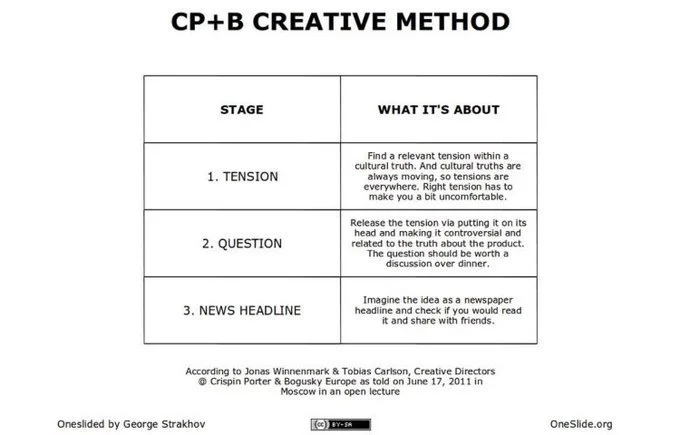
The Crispin, Porter + Bogusky creative brief format
At the time, youth sports were becoming increasingly specialized. Travel teams were growing, elite training was becoming more important.
IMG Academy represented one extreme version of this model: athletes leaving their local environments to live and train in highly specialized sports ecosystems.
I remember clipping a 2015 New York Times article, "High School Football Inc.", about this and showing it around the office.
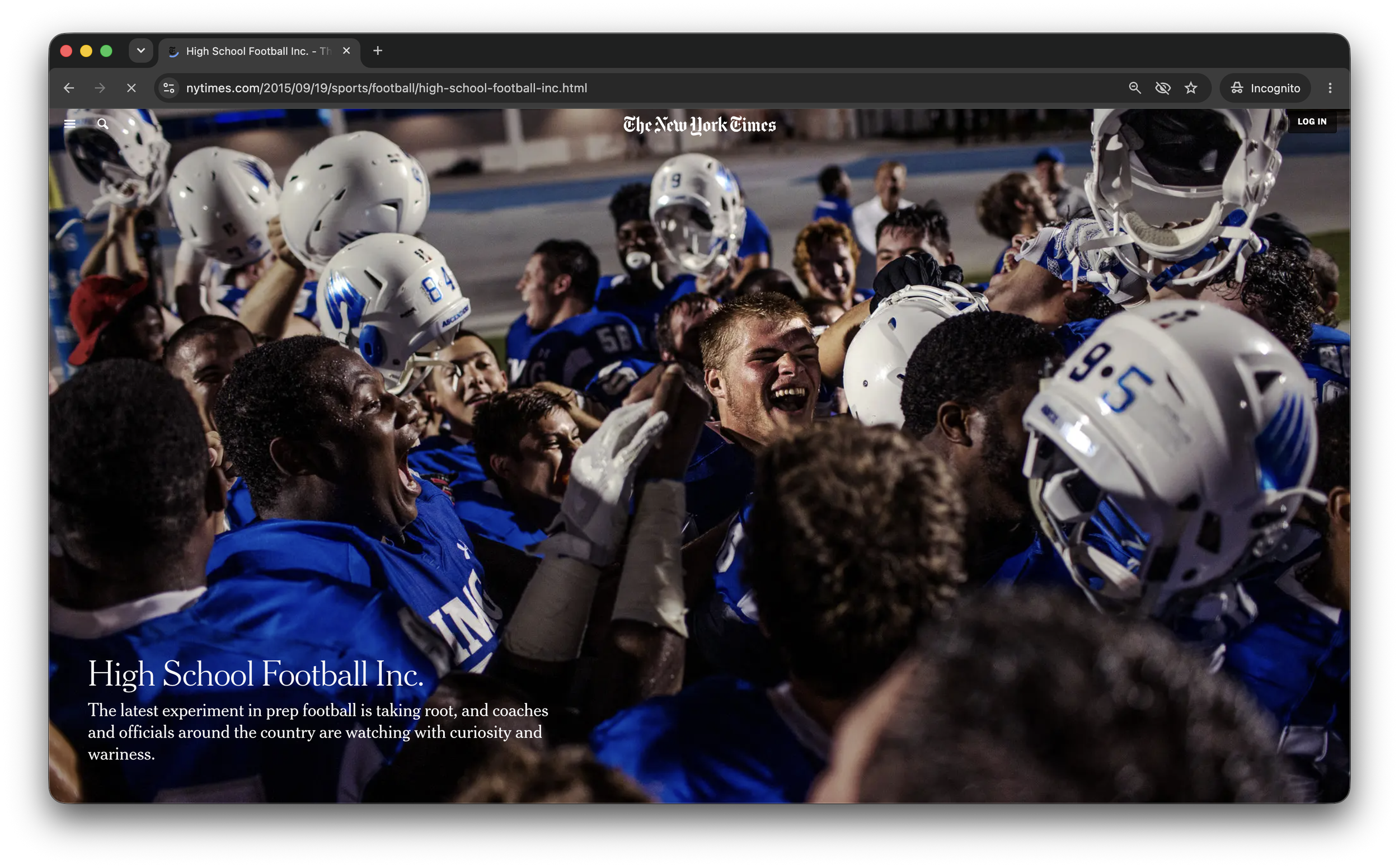
The opening from VNN’s 2016 Brand Deck
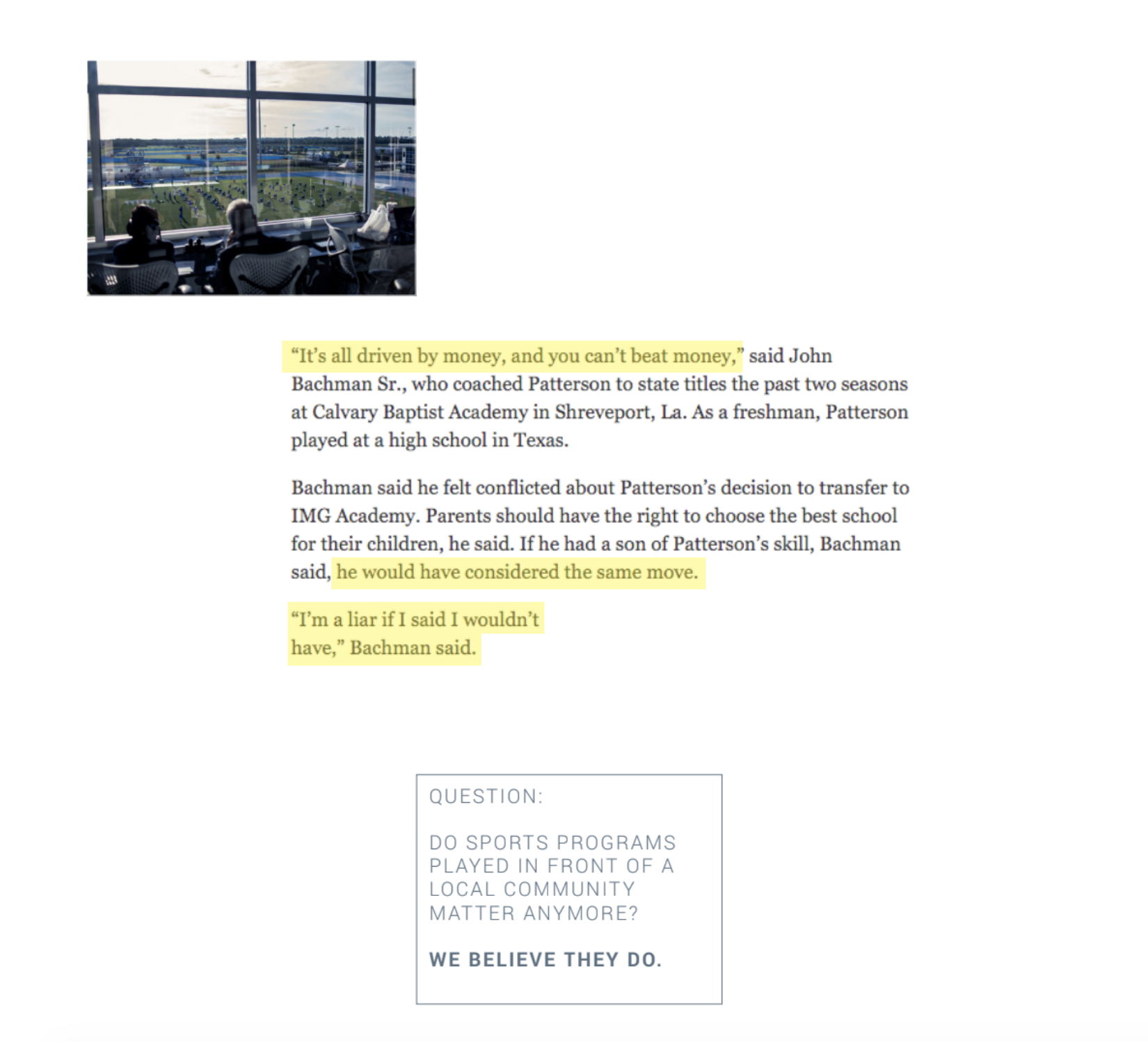
This wasn't inherently bad. After all, if you're a talented young athlete and you want to maximize your potential, there are very good reasons to seek better coaching, stronger competition and more opportunities.
And while I love all my friends who were working on this side of the business — there was a very real tension that put us at odds slightly:
What happens when developing the athlete starts to separate the athlete from the community?
This idea became an important part of the thinking. It made us uncomfortable — and if the entire world became private finishing schools for college and the pros? I'd guess it would make a lot of people reading this case study puke.
That made it real and something we could rally around.
We weren't against elite sports...we were for the idea that there should still be a place where kids could play for their school, their friends and their town.
3. We talked to athletes
One of the most telling things about whether or not this idea had legs was interviewing college and professional athletes about their careers.
We asked about their favorite sports memories, and something happened over and over.
They would start by answering the question in that professional way someone would for a task, but then they'd remember something and their expression would change.
They'd start talking about a high school game, a teammate, a bus ride, a rivalry, a coach or something completely insignificant that had somehow become one of the memories they carried with them.
And they'd light up!
I dare you to prod an athlete about their high school rival at 20, 30 or 50 years old — even forty years later they still hate them. LeBron likely dislikes his high school rivals MORE than he does the teams he plays against in the NBA.
Sorry Chippewa Valley, I'm still carrying a grudge.
These stories sometimes were about winning championships, but a lot of the time, it was mostly before sports became a job.
It was an emotional truth.
School sports were an important part of people's memories of belonging.
Even more reason this idea worked.
4. Our customer needed to be the hero
All this, and we felt like we were onto something.
But what good could it be without actually thinking about the customer?
And this is where it all lined up.
The hero of the story shouldn't be VNN, it shouldn't even be the athlete, it should be the athletic director.
Athletic directors are the connective tissue of a school sports community.
They schedule the games, manage the budgets, coordinate with coaches, communicate with families, promote teams, sell tickets, handle logistics, manage facilities, deal with cancellations, make sure everyone knows where they are supposed to be and when they're supposed to be there.
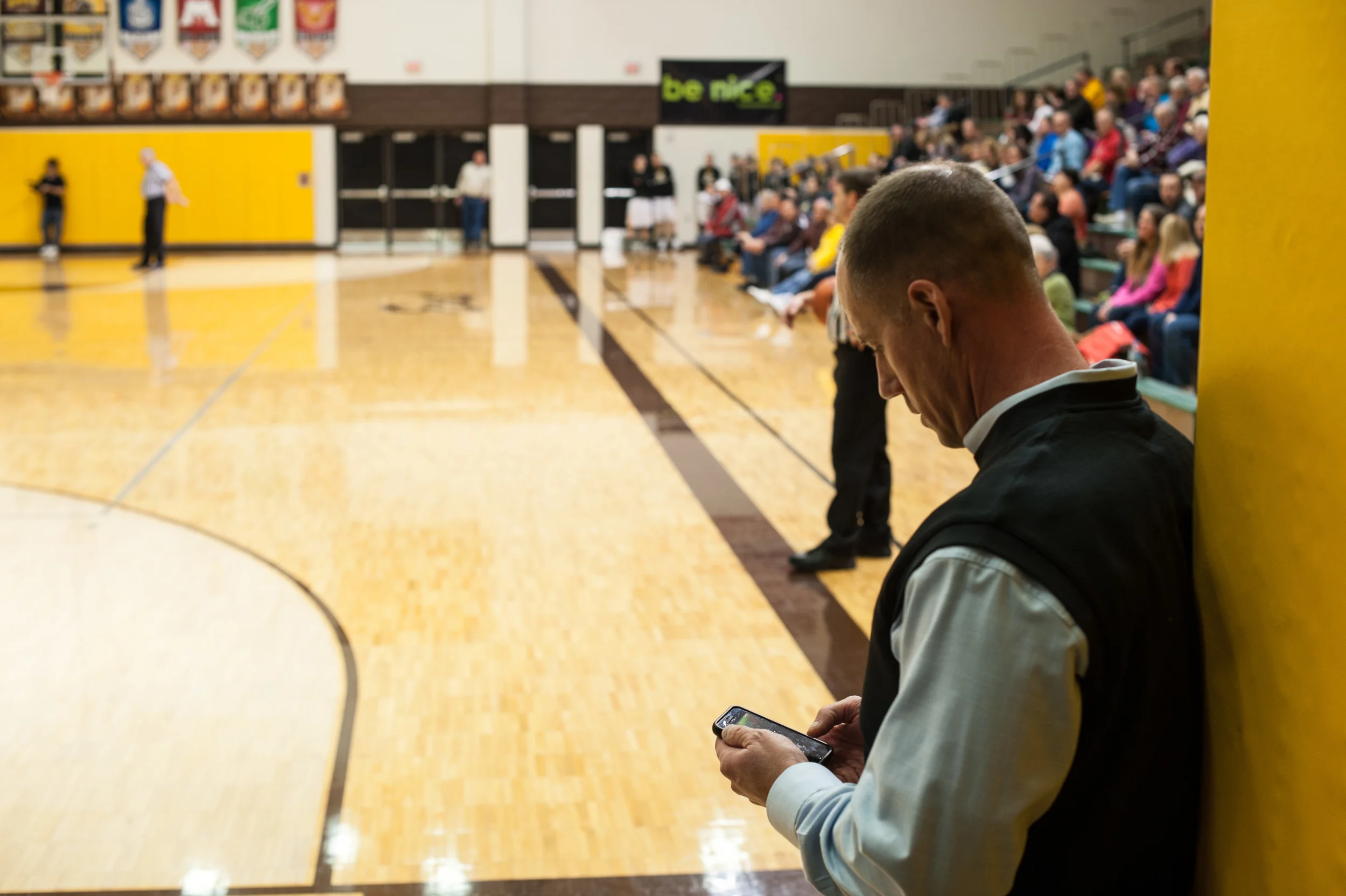
Zeeland East (MI)’s athletic director, Tim Ritsema, doing what he does.

A great athletic director is an administrator in title, but more importantly they are helping create an experience that families remember.
So we positioned the athletic director as the person responsible for bringing the community together.
VNN's job (and our product) was to make that person better at doing it.
This is how we tied the story to the customer…but there was still one thing left.
5. The product needed to deliver, too
VNN's SportsHub Platform was essentially a communications infrastructure for the athletic department.
You would put information in one place, and it would get to the right person, in the right place.
A schedule on the school's website, scores on social media, parent text alerts, box scores to local media, teams using an app — and different schools could configure it all differently.
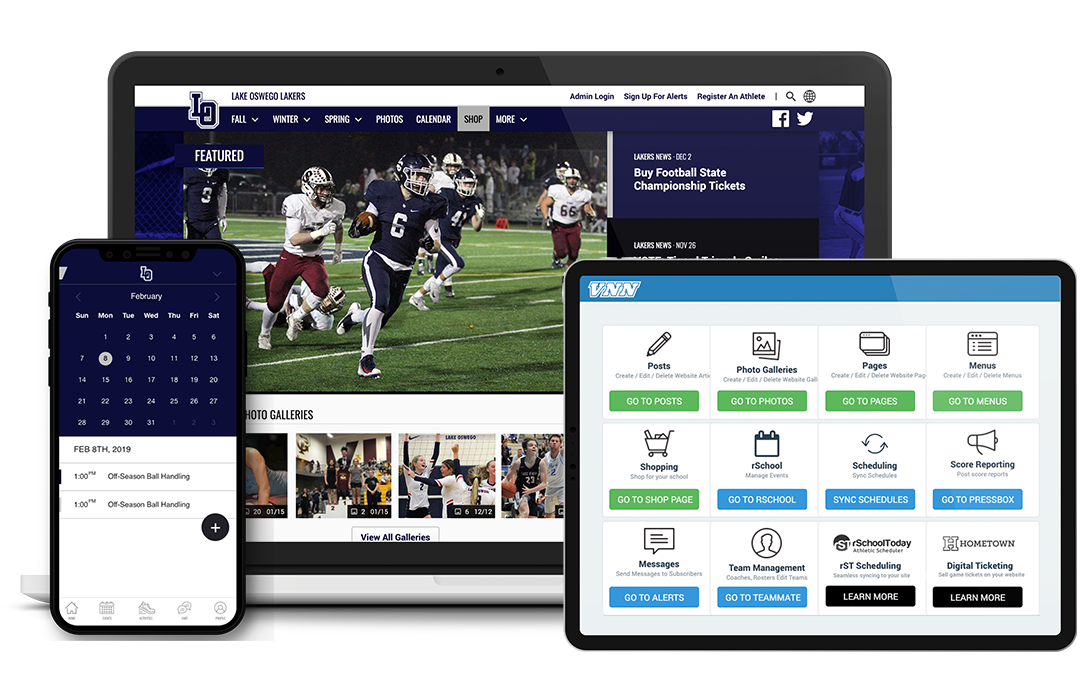
But the underlying idea was consistent:
Make it easier for the school to communicate with the people who care about it.
This customer had too much to do and we made it easier. Check, check.
6. We ran the business with it as a decision-making tool
Now that we had all the pieces — how did this translate into actually running the company?
We created a simple brand heuristic so the idea could live inside the company.
We called it our brand platform — which wasn't meant to be a slogan everyone memorized and then forgot — but more like a set of questions people could use when making decisions:
Does this help strengthen the relationship between a school and its community?
This gave all of us across different functions a way to evaluate product ideas, marketing decisions, how to attract new employees, who to hire, where to partner, what content to create — we'd all be able to look at new ideas, proposals, releases through this lens and agree easier since we were all coming from the same core principle.
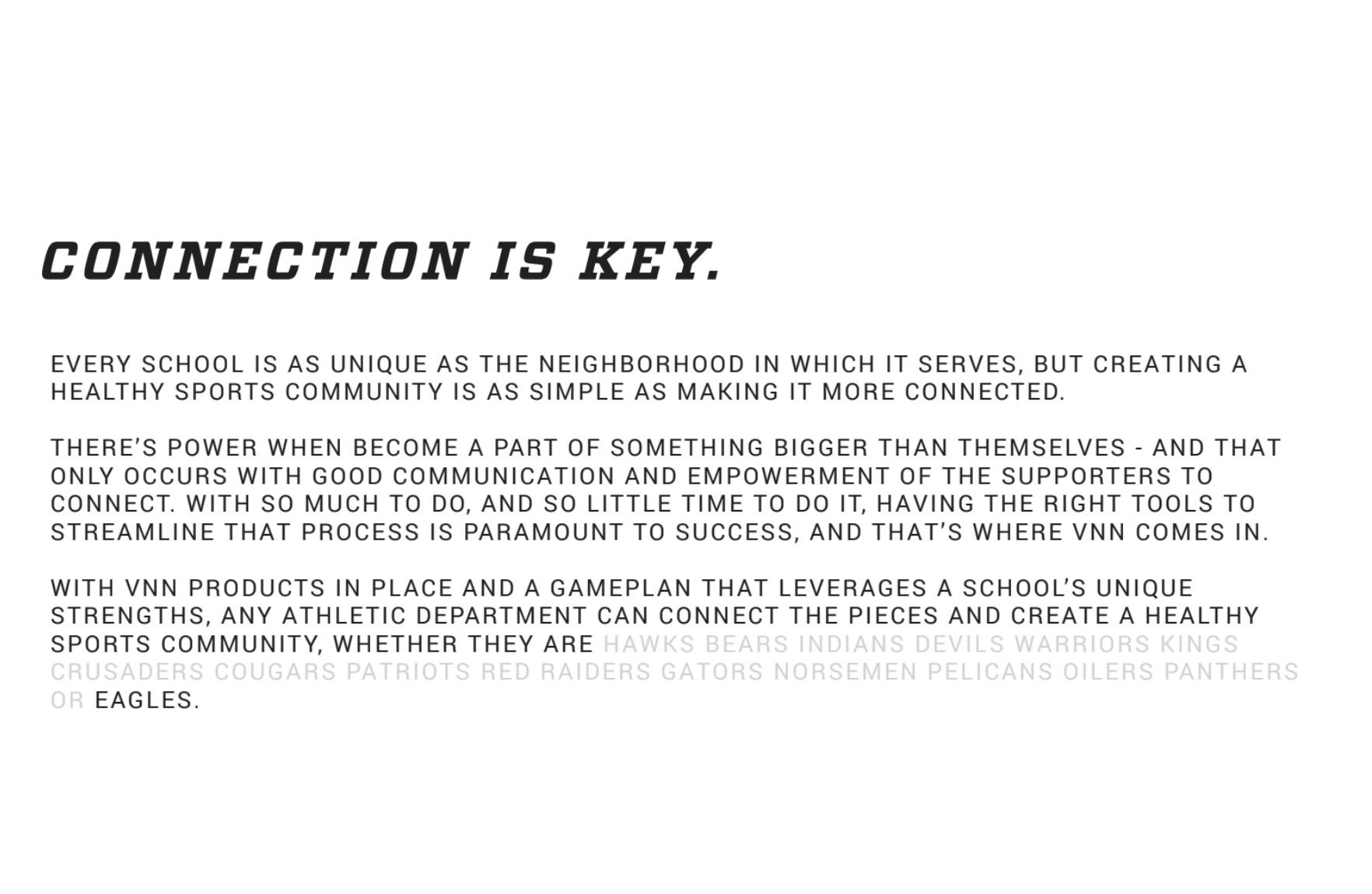
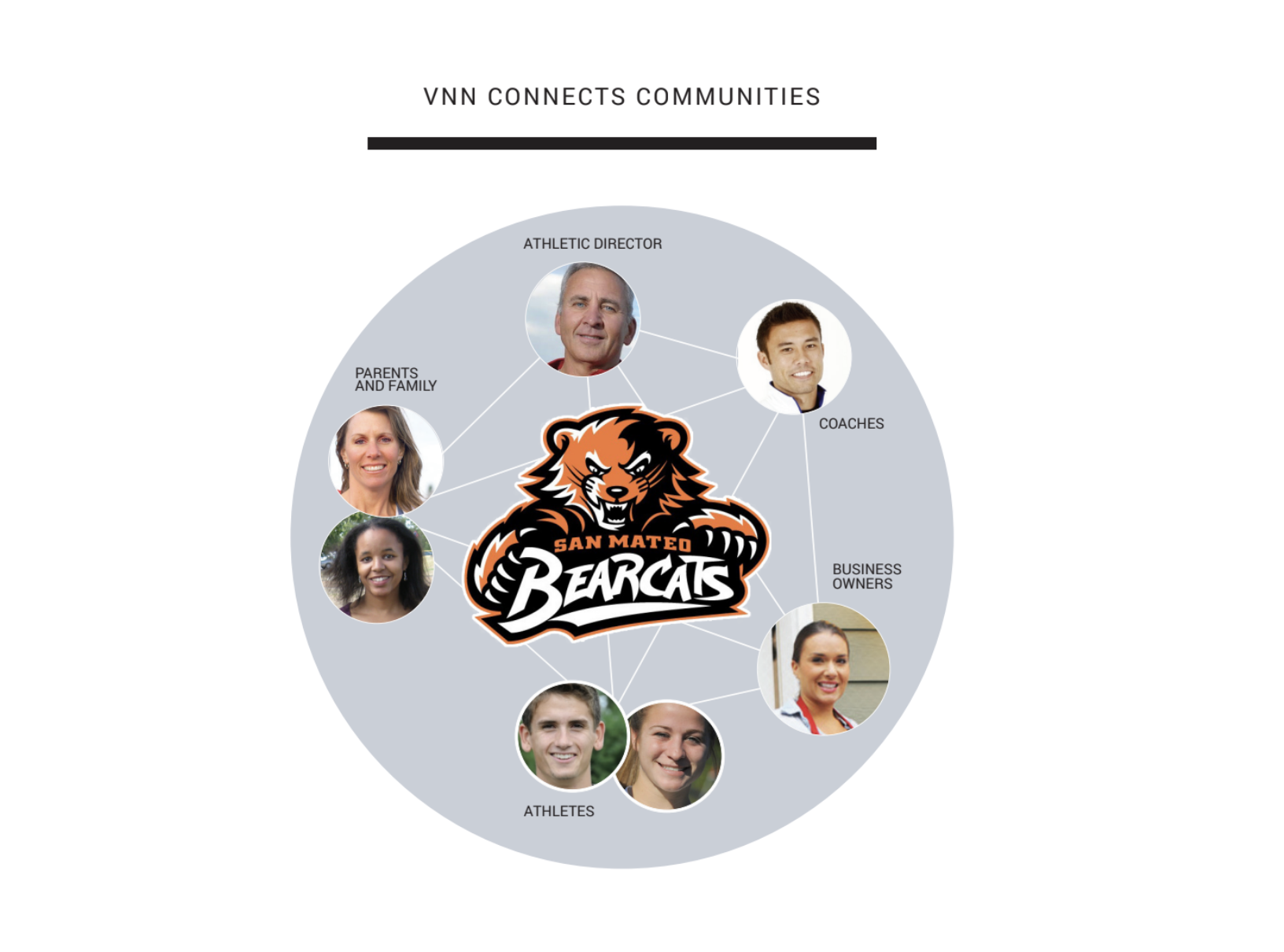
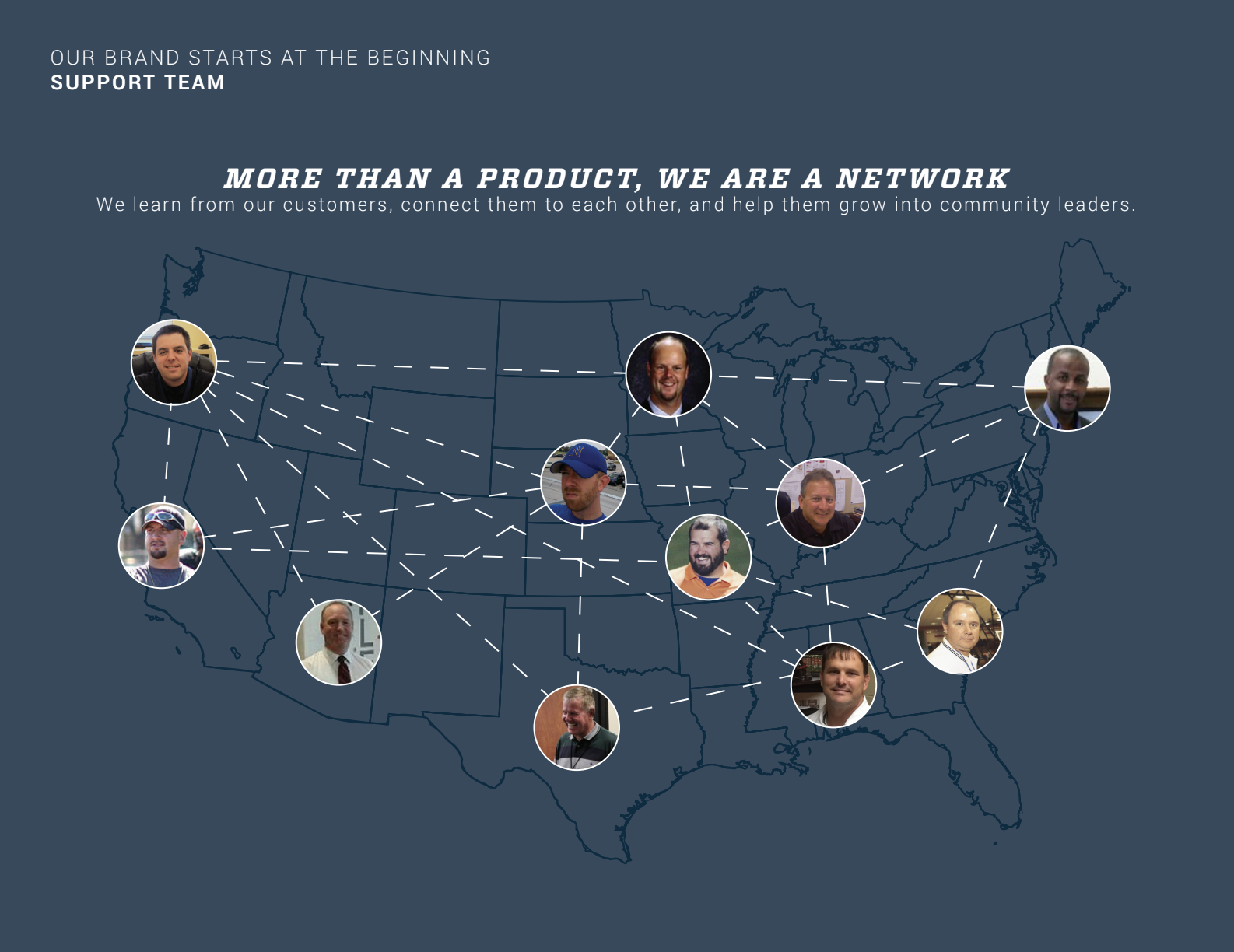
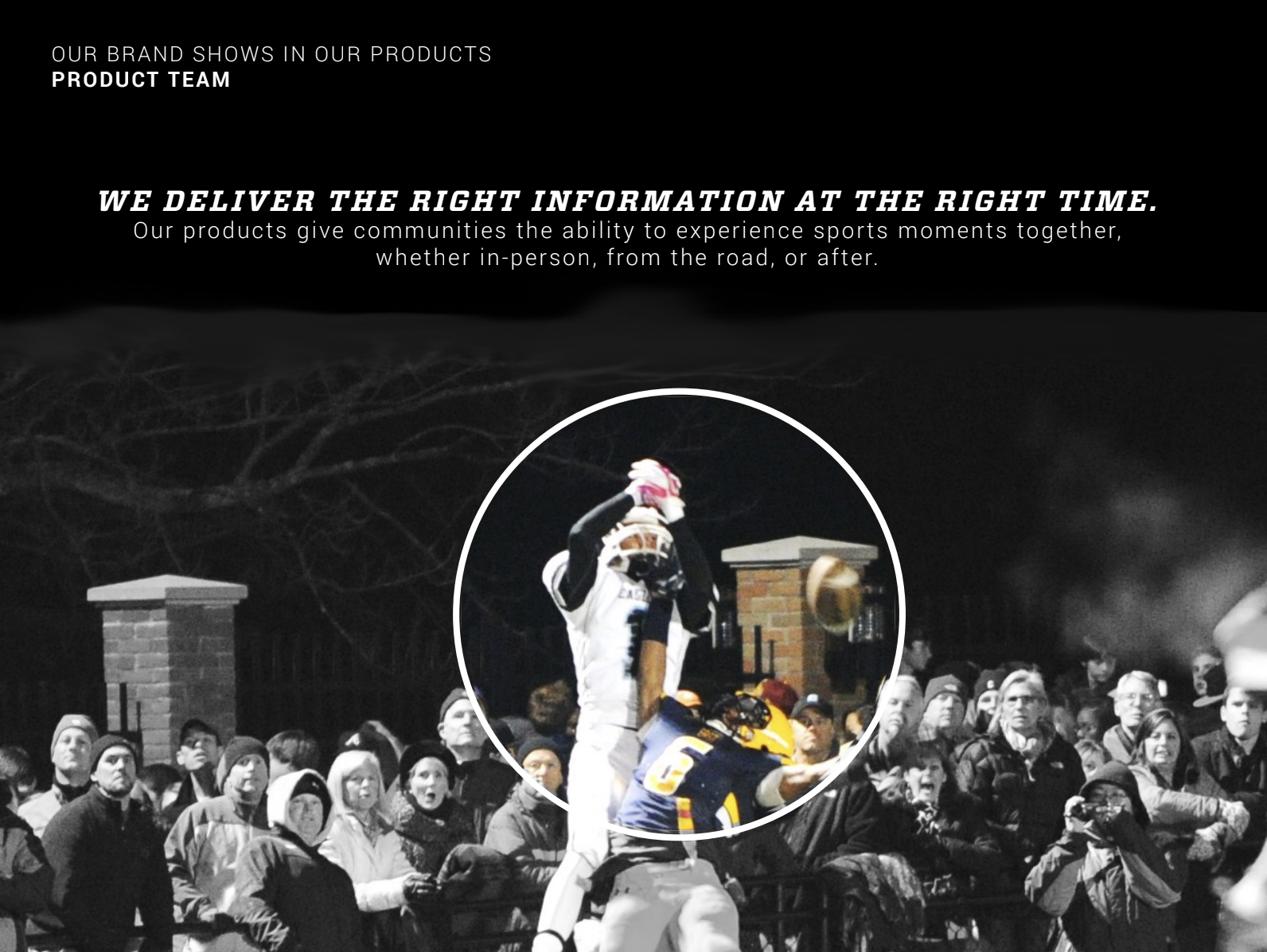
We also brought the idea into sales.
Rather than asking salespeople to give prospects a long brand presentation before showing them the product, we created a slide or two that could sit naturally at the beginning of a pitch.
Lay out the brand, explain the problem, show the software. It was context setting, not "marketing."
7. We made local businesses part of the story
There was another opportunity where this worked to grow the business.
The advertising part of our company needed a reason to exist beyond "we can target people." Famously, Google and Meta can target people extremely well!
So why should a local business be spending money with VNN? One answer was because spending money in your community matters.
A local business supporting the local high school with advertising dollars isn't just buying an impression on an algorithm, it was participating in the place where its customers actually live; which we believed could go further.
So our advertising proposition became something like: Don't just advertise to your community. Invest in it.
8. We used the platform to find partners who could amplify the mission...and grow our business
We also looked for partners who shared this underlying belief in the power of community to unite people.
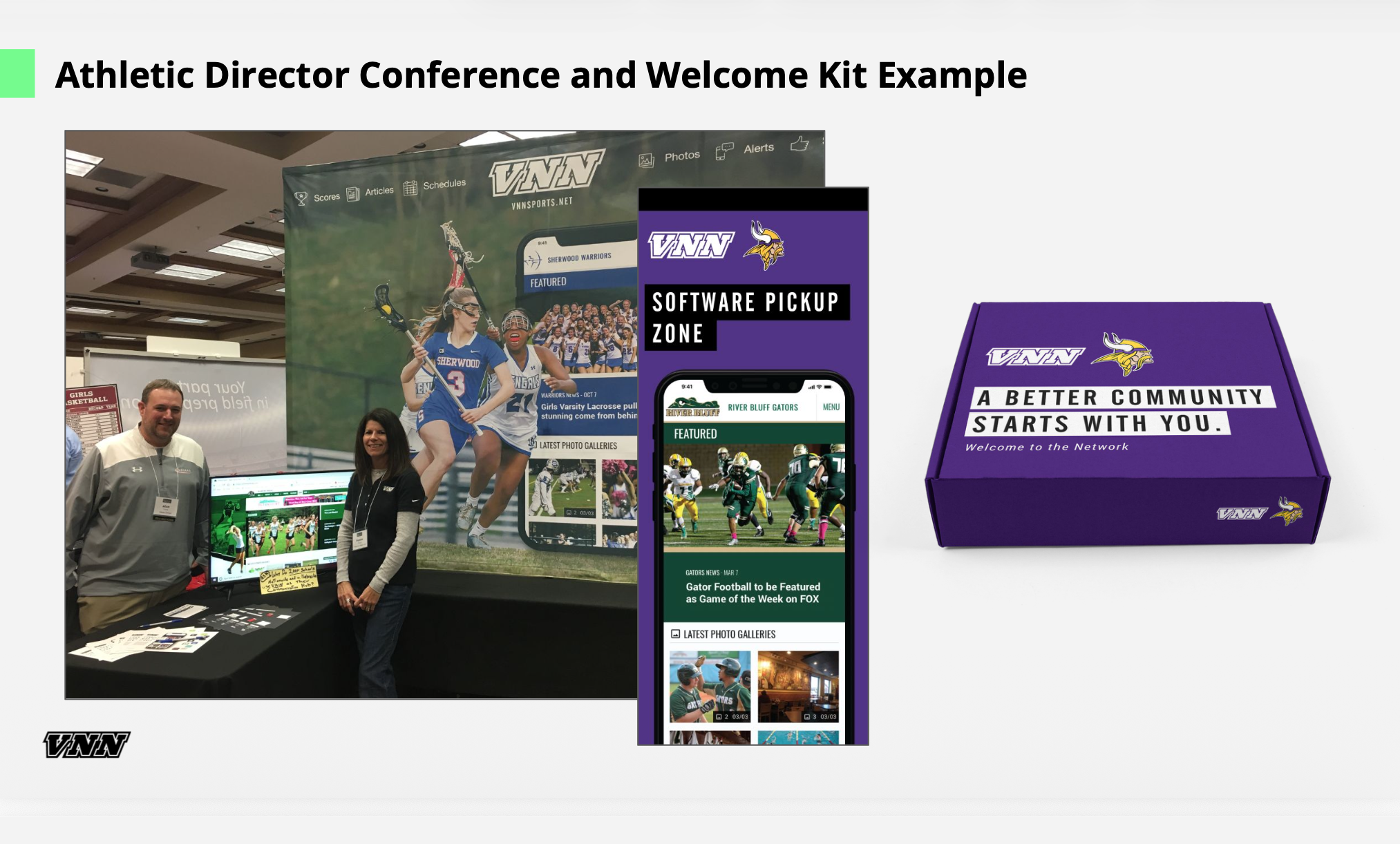
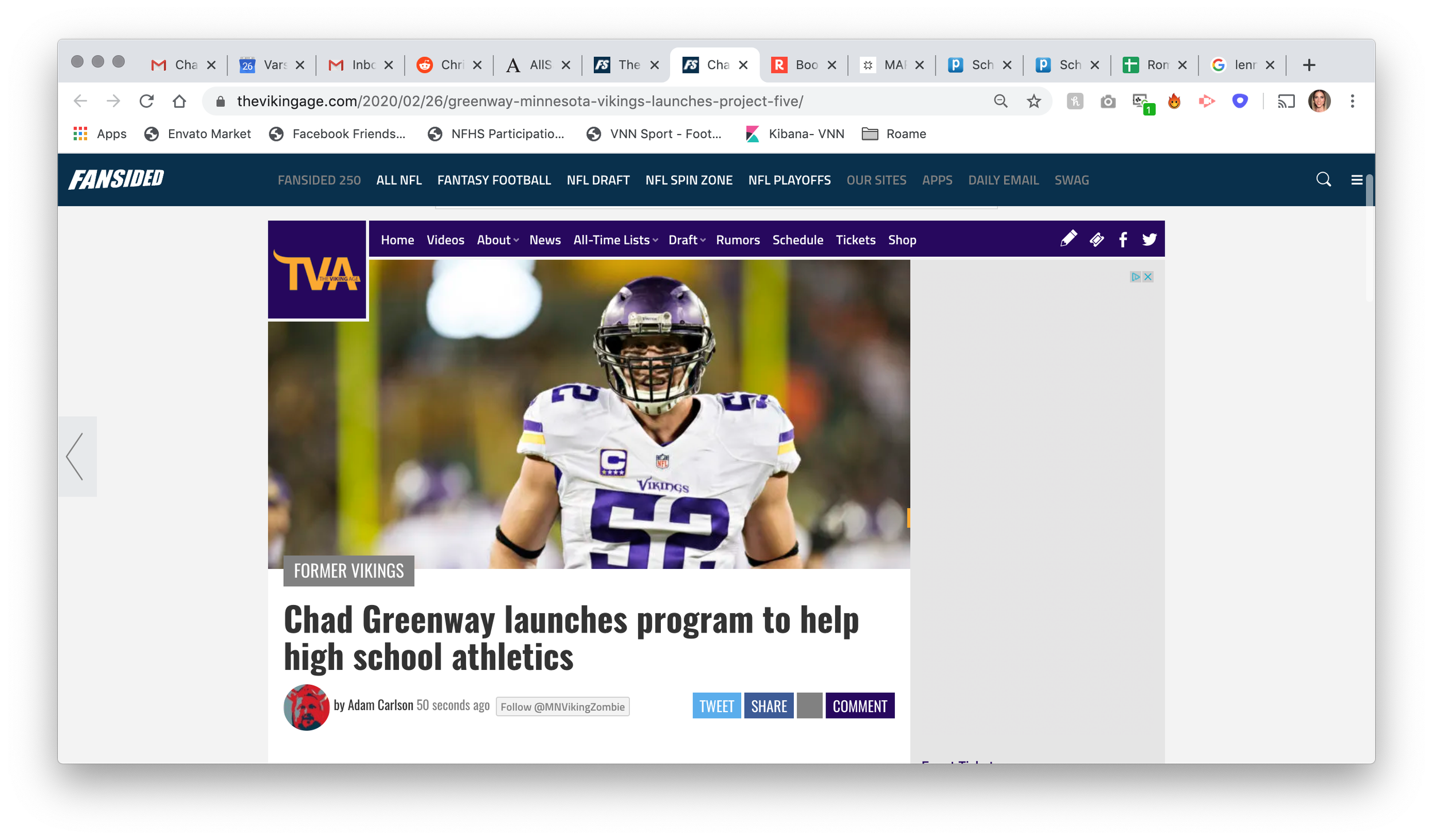
Organizations such as TCO Orthopedics and people such as former NFL linebacker Chad Greenway could help subsidize the cost of the platform for schools to ensure everyone had access to the tools needed to build their community.
From here, we had an interesting flywheel:
Partner helps school.
School gets better technology.
VNN gains a customer.
Partner gains meaningful local exposure.
Community receives something it otherwise may not have been able to afford.
We used each other's megaphones to make the mission bigger than VNN could make it by itself.
9. We created the Best Community in America
One of the ideas I was most excited about was creating a yearly competition around the Best Community in America.
There was an opportunity here to celebrate the schools most aligned with the mission, which became an algorithm designed to measure participation across the broader athletic community.
We looked at things like:
Participation from coaches and school professionals
Popularity of the content being created
Game ticket sales
Video streams
Sports registrations through our platform
Then, we normalized the results based on school enrollment so a school with 2,000 students didn't automatically beat a school with 500.
We awarded state, regional and national champions — and used public relations and local media to tell the community that its school had been recognized.
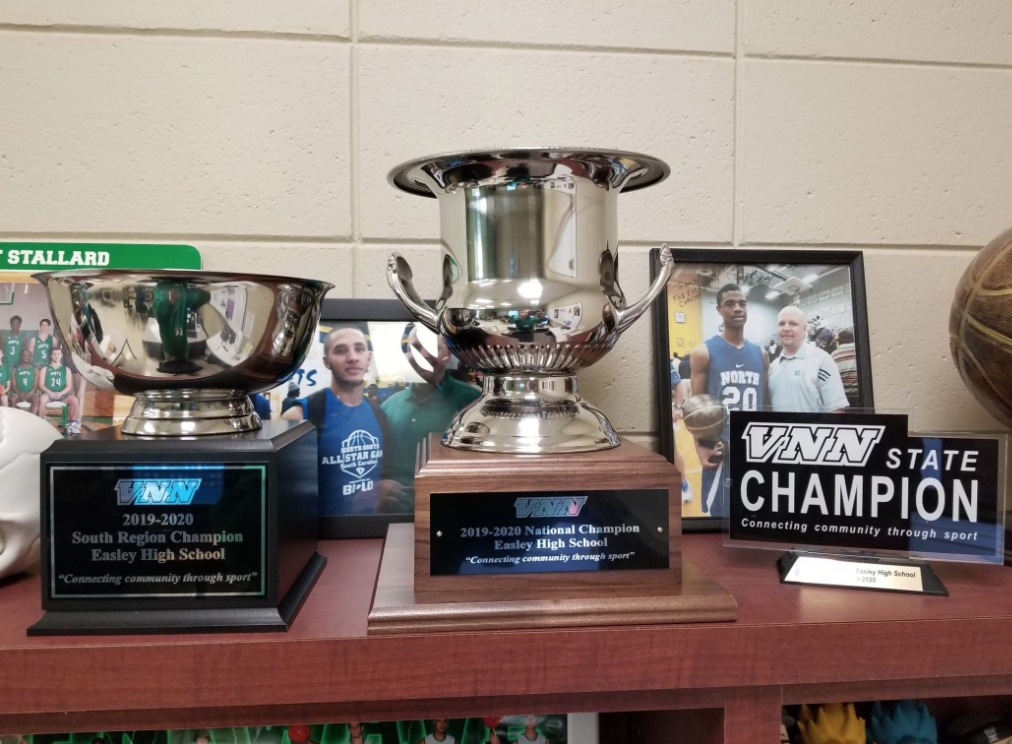
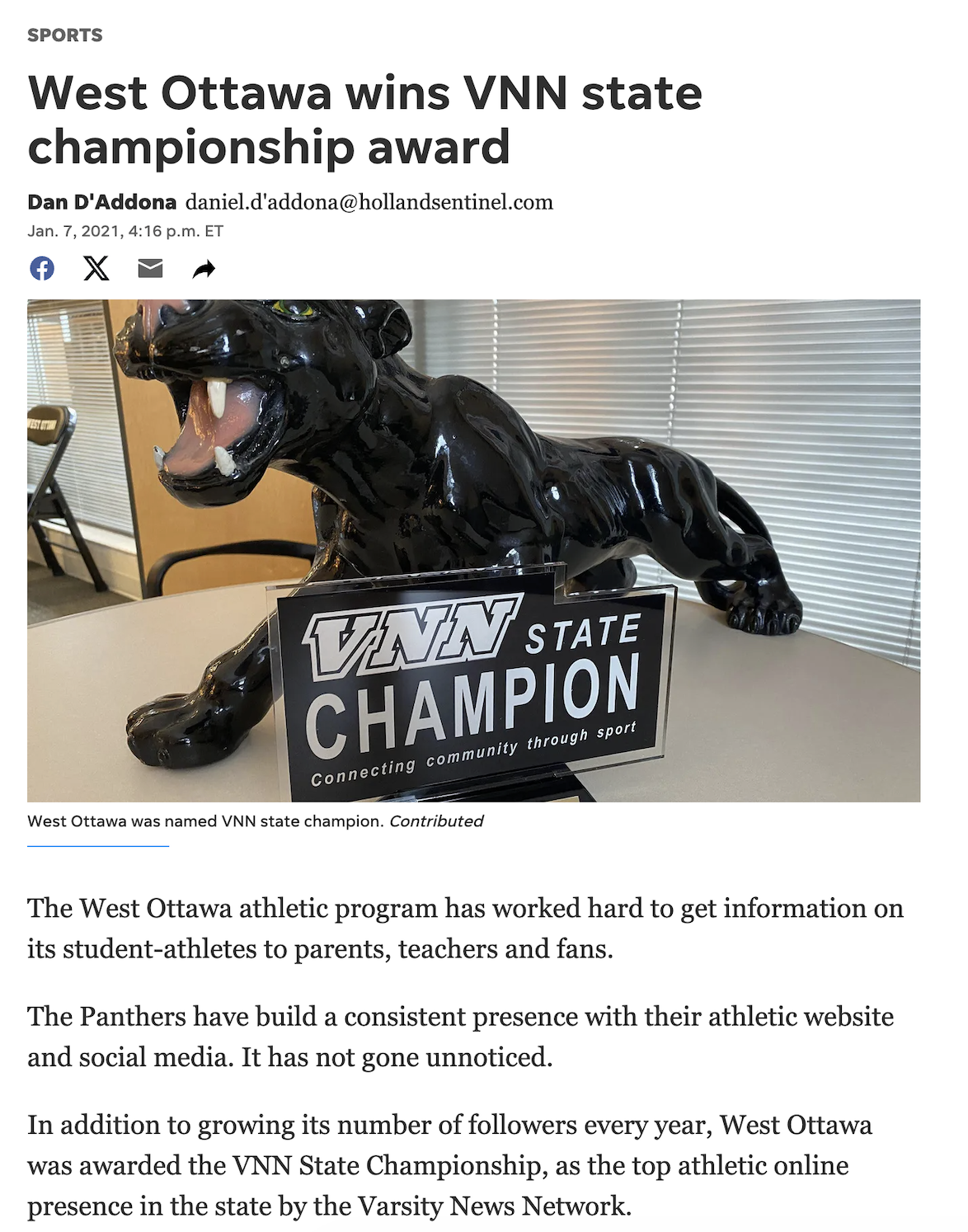
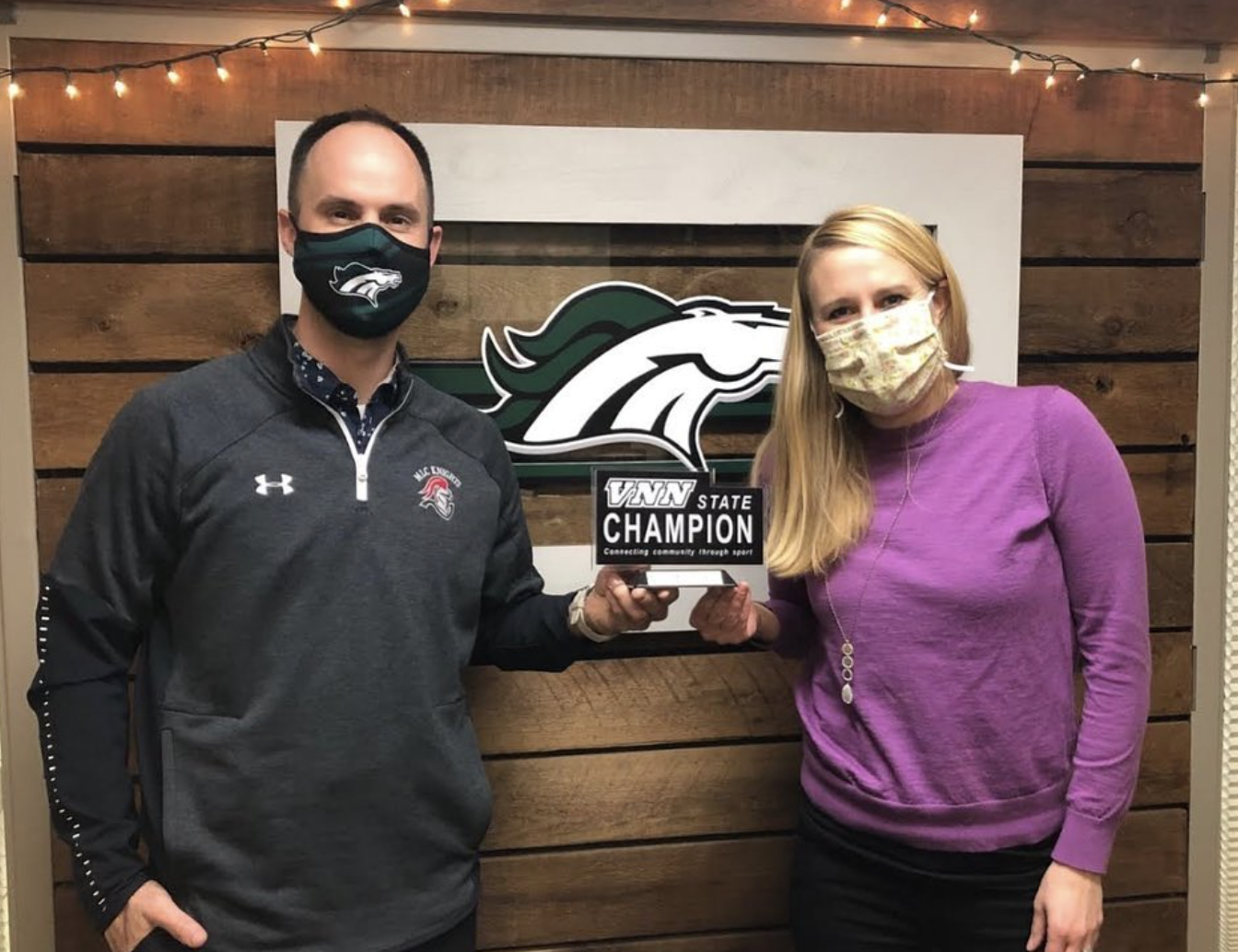
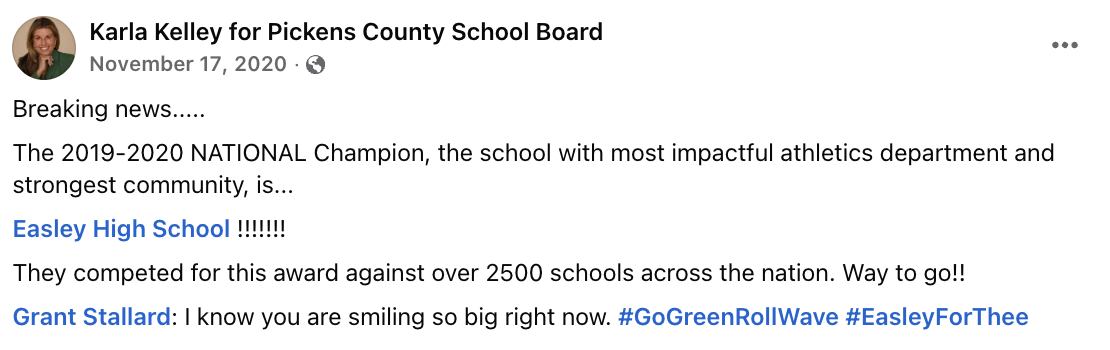
The school got a trophy for the trophy case.
Some administrators actually took it to their school boards and got raises!
The point wasn't really the trophy. It was giving communities a reason to recognize themselves through the lens we hoped to see in the world.
10. We also used it to measure our success...differently.
This led to one of the more unusual KPIs we considered.
Revenue, sure.
Website traffic, sure.
MQLs for sales, sure.
But bigger than that we wanted to know:
How many teams does the average user follow at a school?
It's kind of logical — if you're a parent, you might follow your child's team. Two kids? Two teams.
But what if the average user follows four or five teams?
That starts to tell us something different.
They're no longer using VNN to keep track of their kid, they're paying attention to their school; interested in other sports, other athletes, teams.
That was the behavior we wanted to create!
If someone came to VNN to see their daughter's soccer score and ended up following the volleyball team, the wrestling team and the track team, we'd know we'd done something more interesting than generate another fraction of a CPM for an advertiser.
This was our attempt to turn an emotional brand idea into a measurable behavior.
11. It helped re-invigorate footage from our archives
Because VNN sat on top of so much high school sports video, we had another advantage.
We could show people what they remembered.
We interviewed college and professional athletes about their favorite high school sports moments and then incorporated the actual game footage into the stories.
The footage made the memories tangible — and again, something happened on camera.
People lit up!
They weren't talking about their current careers anymore.
They were remembering being seventeen.
That was some of the strongest evidence we ever had that the idea wasn't manufactured by marketers.
People actually felt this way.
12. If only...one idea I never got to build
There was one extension of the strategy I particularly wanted to pursue.
VNN had so much structured data on high school sports:
Schedules, scores, ticket links, rosters, logos, team colors, game information.
We could have opened that data through an API to local businesses. It was already formatted in a very organized way that would have made it possible
Imagine:
A coffee shop displaying that night's games.
A pizza restaurant promoting the local team.
A car dealership putting the week's schedule on its digital screen.
An insurance agency featuring a local athlete.
A bar helping sell tickets to the Friday night game.
A grocery store putting the schedule on receipts.
The technology existed, I was using it for reporting all the time...we baked it into our Marketable Moments project.
The next step was to let the community use it.
If this worked, the school wouldn't just communicate out to the community — the community would help communicate the school.
This could have turned VNN from school software into something much bigger: infrastructure that helped create that East Grand Rapids feeling across the country. Next time!
The ultimate measurement
I still think about the simplest possible expression of the idea.
An athlete from a sport that doesn't normally get much attention walks into a local coffee shop. Maybe she's a swimmer or he's a wrestler, or they run cross-country.
The person behind the counter recognizes them — "Hey, weren't you the one who won last night?"
And the athlete realizes that somebody outside their family knows who they are. That's community.
…that's what we meant with this whole thing. And that was the promise of our product.
Sports can develop better athletes, good attitudes, teamwork and resiliency in people who play.
But most importantly, they can also help develop stronger communities.
In 2023, we sold VNN and rSchoolToday to PlayOn! Sports, which also owned the NFHS Network and GoFan brands.
Community Starts with Sport wasn't the only reason the business grew, of course. But it was an example of how I believed brand could work when it wasn't treated as a layer on top of the business — but as a connective tissue between the customer, product, revenue model and the mission.