A New Kind of Media Rights: Why Sports Needs a Creator-Class Package
I’ve been thinking a lot about the next evolution of media rights— how sports properties actually grow in a world where linear reach is shrinking, subscription fatigue is real, and cultural discovery happens through creators, not networks.
And the more I study it, the clearer it gets:
The next breakout property won’t win with a bigger TV deal alone. It’ll have a creator-class rights tier too.
That belief comes from an experience I had in 2024 that reframed how I see distribution altogether.
The Spark: When a Title Belt Became a Rethink of Rights
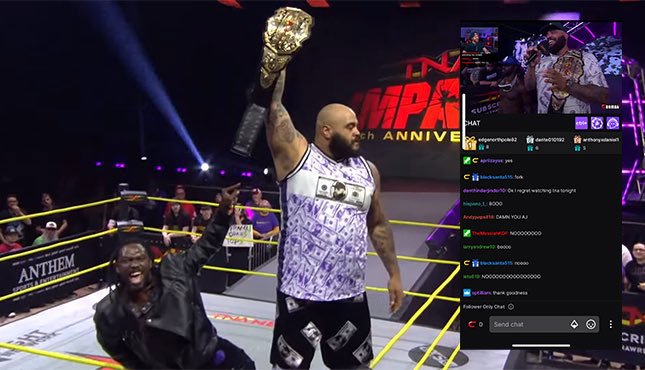
When I was helping TNA Pro Wrestling scale their digital marketing efforts, AJ Francis beat Laredo Kid to win what was then known as TNA’s Digital Media Championship. Ever the showman, he wanted to ‘live the title’ and came to us with an digital marketing / distribution idea:
“Let Twitch streamers and wrestling creators co-stream the entire show when I’m on it with their audience — legally.”
Great idea, worth seeing what would happen so we green lit it. AJ introduced us to 20+ streamers— SanchoWest, conman167, MrSantiZap — people with real communities, real trust, and real influence. We tested it.
What became immediately obvious:
Creators move culture faster than marketing budgets.
Their audiences aren’t passive — they’re participatory.
A co-stream isn’t a clip. It’s a channel promoting you while you sleep.
After the show is over, you can farm the best content over and over.
While we set up the test to try and drive individual purchases and referral sales, which may not have been the right original lens, by the time this wrapped - the experiment forced a bigger question:
Why aren’t creators treated like rights holders, and could they be?
The Model: A Creator-Class Rights Package
What emerged from those tests was the blueprint for a new rights tier:
1. Licensed Co-Streaming
Select creators get simulcast access—full shows, not highlights.
2. Slots on Owned Channels
Twitch, YouTube, owned streaming apps — making the creators part of the official programming grid (with their shows in syndication).
3. Backstage Access
IRL streams that generate authenticity no traditional broadcast can replicate.
4. Revenue-Share Mechanics
Subscriptions, PPV referrals, digital conversions — the creator earns when they convert.
Some of these same benefits come from influencer marketing, but we were thinking bigger; distributed media infrastructure.
Fans → Creators → Talent → Paid Platform
A funnel with aligned incentives.
Where It Gets Hard: The Real Challenges (And How to Solve Them)
This model could be innovative, but it’s not frictionless. And most sports properties that may try to do something like this in a big way would get tackled by the same obstacles.
CHALLENGE 1: Traditional Rights Holders See Co-Streaming as Cannibalization
Networks and distributors likely would say:
“If fans can watch through a creator, why would they watch on our channel?”
“This weakens the exclusivity we paid for.”
Solution: Treat creators as top-of-funnel, not replacements.
You enforce:
Simulcast windows on non-premium programming
Mandatory redirects back to the primary platform for PPVs
Attribution tracking for conversions
Bundle advertising rights to let the network (and internal) sell the creators reach too.
Creators shouldn’t replace the core product— they should amplify it.
And you give networks performance data they’ve never had before.
CHALLENGE 2: Advertisers Don’t Trust the Wild West
Brands worry about:
Tone
Language
Unpredictability
Safety for sponsorship integrations
Solution: Create a credentialed Creator Pool with brand-safe tiers.
Tiering looks like:
Gold Tier – Pre-vetted creators with explicit content guidelines, access to sponsor inventory, and eligibility for rev-share.
Silver Tier – Limited access, no sponsor inventory, rev-share based on subs only.
Open Tier – Clip rights, no simulcast.
You turn chaos into a managed ecosystem — which advertisers love.
CHALLENGE 3: Finance Departments Don’t Know How to Model It
Traditional P&Ls aren’t built for:
Streaming affiliate conversions
Creator-based rev share
Distributed attribution
Variable inventory
Solution: Build a dedicated Creator Rights P&L with predictable economics:
Fixed-cost creator rights tier
Variable revenue sharing on digital conversions with referral codes
Optional sponsor underwriting
Annualized forecast model based on CAC (customer acquisition cost) vs. creator CPA (cost per acquisition)
When CFOs can model it, they greenlight it.
CHALLENGE 4: Talent May Push Back
Some athletes will worry:
“Are creators stealing my spotlight?”
“Who controls the narrative?”
“Why do they get rights?”
Solution:
You link talent storylines to creator integration:
Talent gets paid bonuses for creator-driven conversions
Creators help build deeper, serialized storytelling
Matches and angles become participatory, not passive
Talent stops seeing creators as competition, and starts seeing them as distribution partners.
CHALLENGE 5: Legal Hates Everything About This
Rights holders fear:
DMCA chaos
Unlicensed streams
Fragmented user experience
Global territory conflicts
Solution:
Centralize permissions through a Creator Rights Portal
Issue geo-specific simulcast permissions
Run automated watermarking
Use tracing and redirect tech
You modernize rights enforcement instead of fighting fan behavior.
The Larger Point
This isn’t theory. The signals are already there.
Just recently, BDE (Brandon), a WWE2k video game-focused streamer, broke 1.45M subscribers on his YouTube channel - more followers than the official TNA Wrestling Instagram account has.
Sports properties can’t grow on the old model alone—too expensive, too slow, too narrow. And creators aren’t the future of distribution — they’re the present.
A Creator-Class Rights Package could deliver:
A permanent top-of-funnel
A distributed content network
A youth discovery engine
And a media-rights product that appreciates in value without bidding wars
Seems like it’s a not a question of ‘if’ this will happen, but when.