What’s Nitro? Building a talent index for pro wrestling from zero.
I realized recently that I haven't written much on this site about Nitro, a project I’ve spent a pretty meaningful amount of the year on. I guess if you follow me on socials, including LinkedIn, you might be aware, or if you read my blog post on Danhausen - but figured no better time than now to post about it here.
I launched Nitro (booknitro.com) in February as a side project using the product, development, and app architecture knowledge I’ve been banking since my time at VNN (now PlayOn Sports - thanks Roger and Bo for teaching me).
It came out of something that used to annoy me while I was running marketing at TNA Pro Wrestling.
Brands like VitaCoco or Activision would come to us looking to buy ad campaigns on our shows. And because the talent were the stars, Rob Kligman and I would want to bundle them into our proposals. But answering what seemed like a pretty simple question, “who makes sense?,” involved a surprising amount of manual work.
The typical thought process was simple and not altogether unsurprising:
How many followers does everyone have?
Which platforms are they strongest on?
Who actually likes the category of the thing we’re promoting?
None of pulling this was particularly difficult - but it was always a new request, and it was annoying. We’d have:
Someone on our team spend the day online updating a spreadsheet of 40-50 talent, across 3-4 social media accounts each.
A conversation with talent relations about mass emailing everyone to understand who had an affinity to [insert category here].
Writing and rewriting that email to make sure it made sense and didn’t play favorites.
A pile of individual responses to sift through — knowing that, in a lot of cases, even a whiff of extra money and association with a big brand could make anyone a fan of video games / chocolate / shoelaces.
Then organizing all of it, figuring out pricing, and getting something back to the client.
Ugh.
Easy, sure. But what a pain.
So after I was out of TNA, I started building something that could do some of it for people.
That became Nitro - a talent index that initially, automatically tracked the social footprint of pro wrestlers.
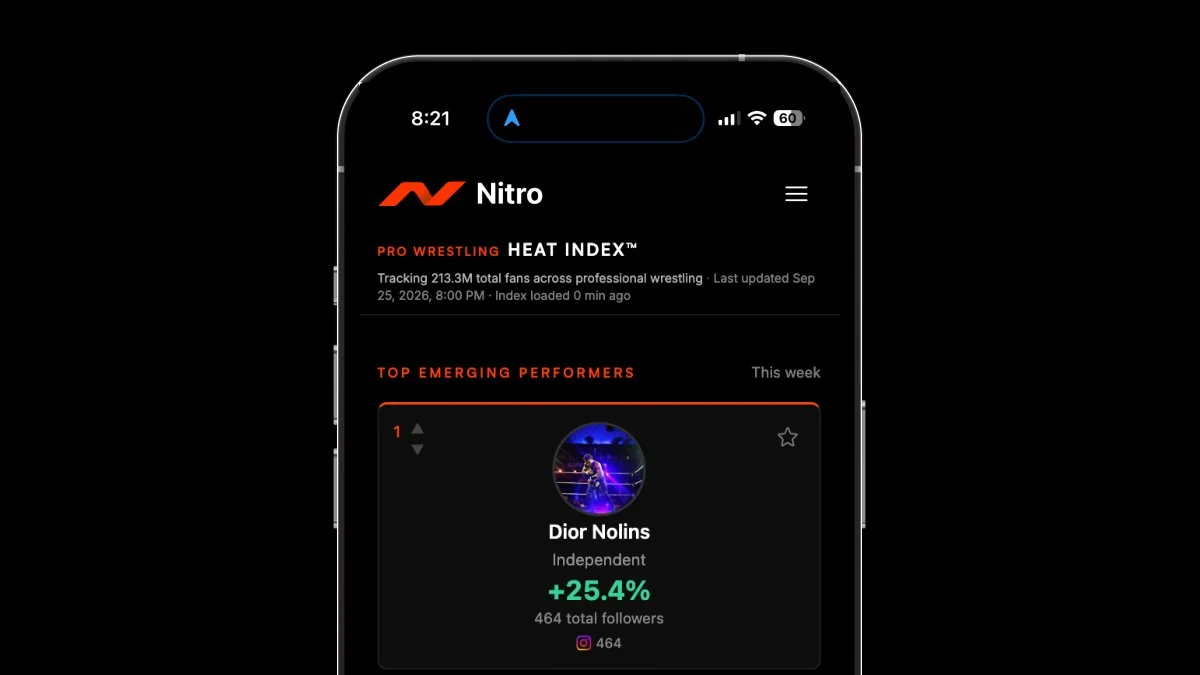
At first, I was mostly interested in the numbers
One of the first times I wrote about Nitro here was in March, after Danhausen debuted for WWE by jumping out of a coffin.
The reaction to the debut was mixed.
But his social numbers weren't.
His Instagram following increased by nearly 25% in three days, and I tried to put a dollar value on what that new audience might actually be worth to him.
I called the post:
So, what's jumping out of a coffin worth, anyway?
It got some publicity- I had wrestling blogs retweeting the story, and asking if they could include it in their newsletters.
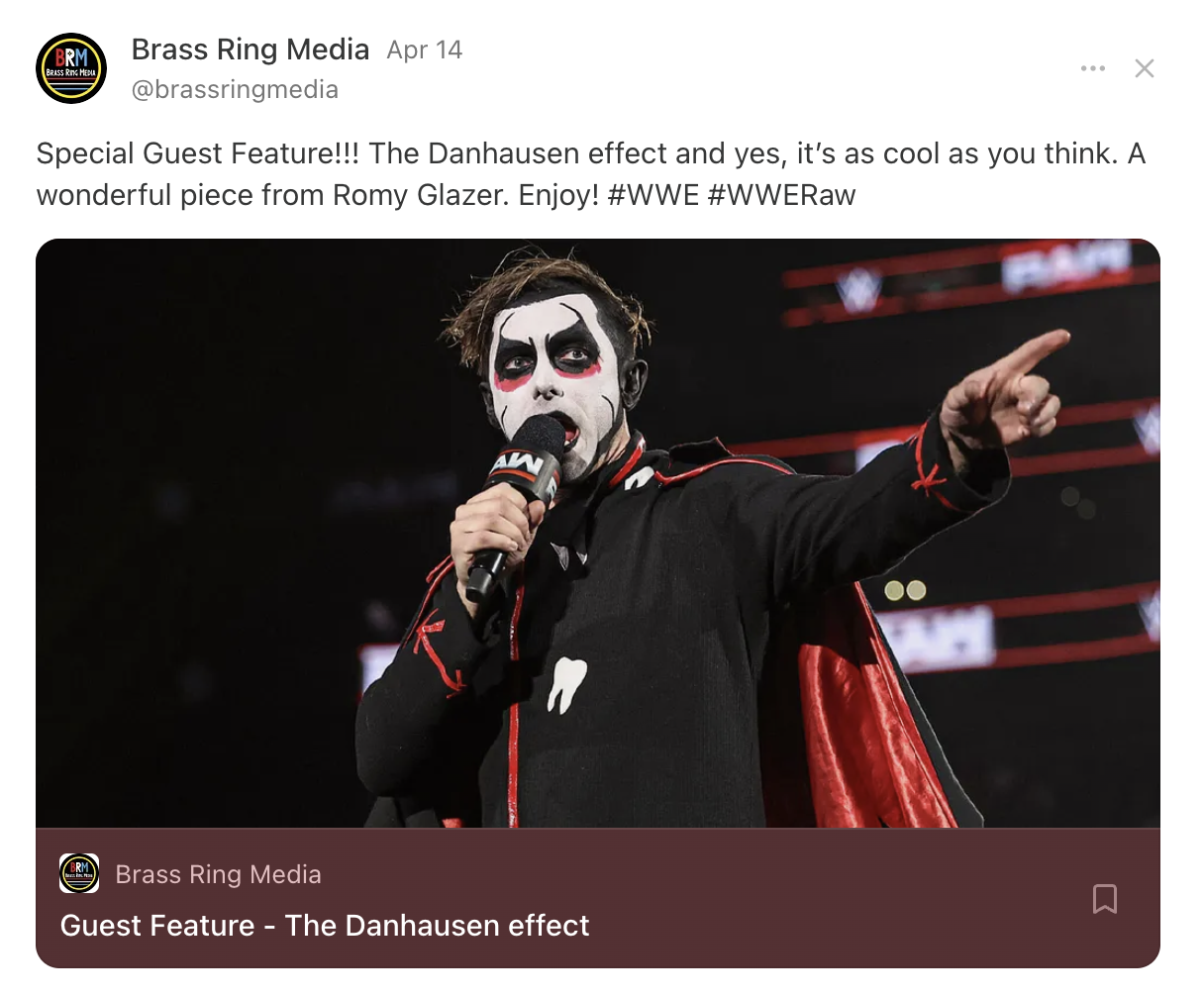
That was probably the first time I realized the thing I had built could be useful for something beyond making brand research easier because now I had before-and-after data.
And once you start watching that every week, it was pretty easy to start asking another question:
Why did this person grow?
“Nitro Insights” and a platform
Nitro started tracking more wrestlers (it’s at about 700 individual talent now), then I figured promotions might want to use it to track their own rosters too.
So I built them the ability to group wrestlers under one umbrella, see their own stats and scout people who are similar. About 20 promotions are using it now.
And on and on.
All the while, each week I’ve been looking at the top ten wrestlers by percentage growth and trying to understand why.
Did they debut somewhere, have a great match, get put into a good story, go viral, leave a promotion, lose in 25 seconds?
The numbers made it easy to know where to look.
Originally, I thought I’d make it a Substack. But if Nitro was eventually going to have a fan product too, sending people somewhere else to read about the wrestlers and then asking them to come back to Nitro seemed like a bad extra click.
Either way, I’ve been writing at least once a week since February.
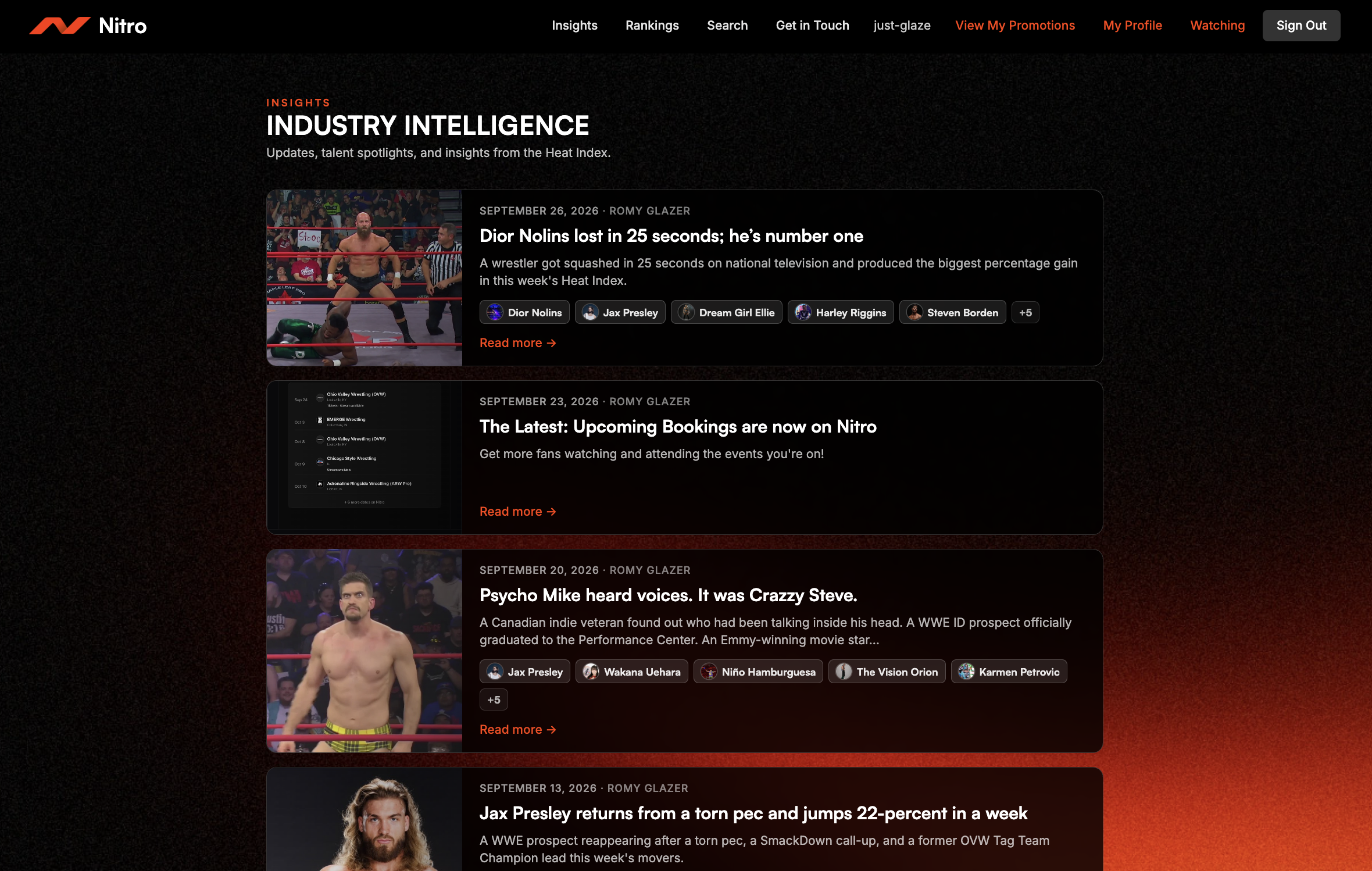
The Nitro Insights Blog (booknitro.com/insights/)
Some takeaways from eight months of research
1. There isn’t one way to get hot
It’s tempting to look at the list every week and come up with a clean explanation for why people grew.
Usually, it’s not that simple - for instance, Dior Nolins. A few weeks ago, Dior wrestled on Maple Leaf Pro Wrestling for the first time. He lost to their Interim Champion Stu Grayson in 25 seconds. And yet he then finished the week as the fastest-growing wrestler in Nitro. Now, his audience IS smaller overall, so a few new followers means a big percentage increase. But even so, he had just been put in front of a new audience, and enough people followed him afterward to make the change noticeable.
KC Navarro was completely different. He also was on top of the “Heat Index” after a loss, but KC wasn't being introduced to TNA Wrestling fans, he had been there a few years. Instead, it was because he was being presented differently. KC was put into a World Title program with Nic Nemeth (formerly known as Dolph Ziggler). He had promos, his family was part of the story and TNA released Immersed, a documentary about KC’s recovery from a torn ACL and his return to the ring. He lost his match, and his audience grew 7.19% that week.
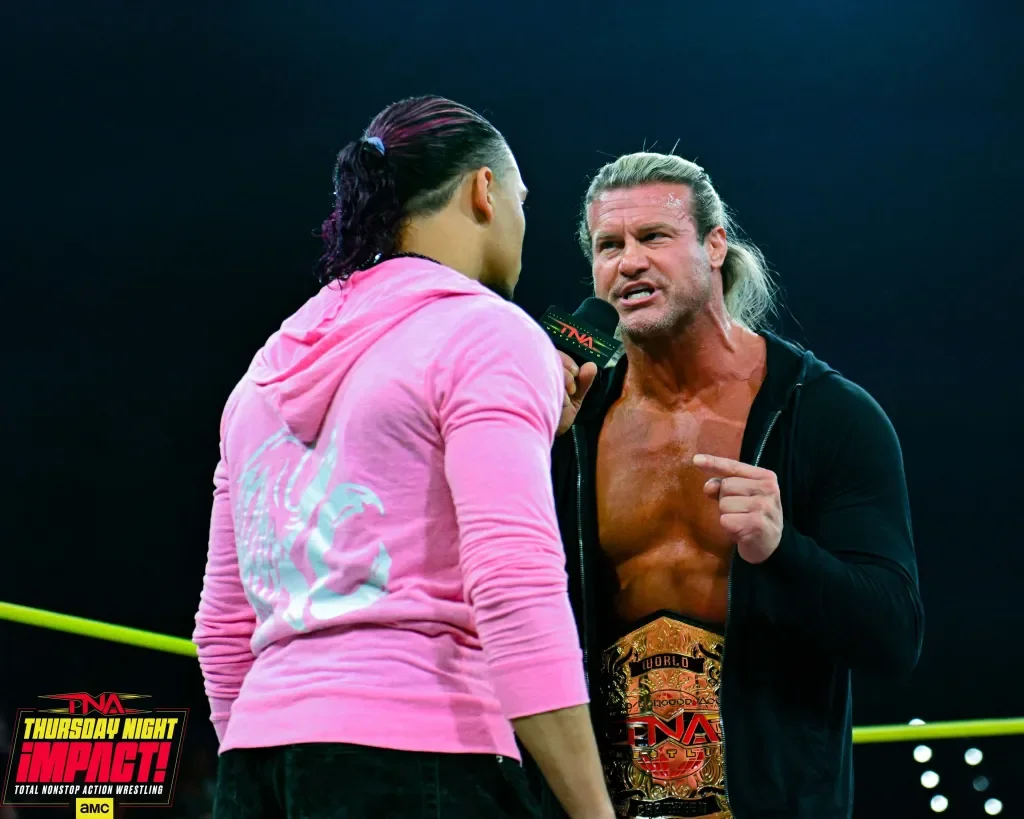
KC Navarro stands off against Nic Nemeth
Oba Femi was also different from both of them. This is a guy who was already a major WWE star with a large audience. Then he beat Brock Lesnar at one of WWE’s premium live events, Hell in a Cell, to finish their rivalry and went to number one in Nitro that week.
There are a lot of different ways to make people care.
2. Distribution still matters a lot.
This one is probably less surprising given my background in marketing.
Earlier this year I wrote something called The Call-Up Bump, looking at what happened to NXT talent when they moved onto WWE's bigger stages after WrestleMania - a part of the year where wrestlers working WWE’s developmental program, NXT, are ‘called up’ to the company’s main roster - and start performing on Smackdown (CW) and RAW (Netflix). This year it included wrestlers like Jacy Jayne, Joe Hendry, Ethan Page, and others. Worth a look.
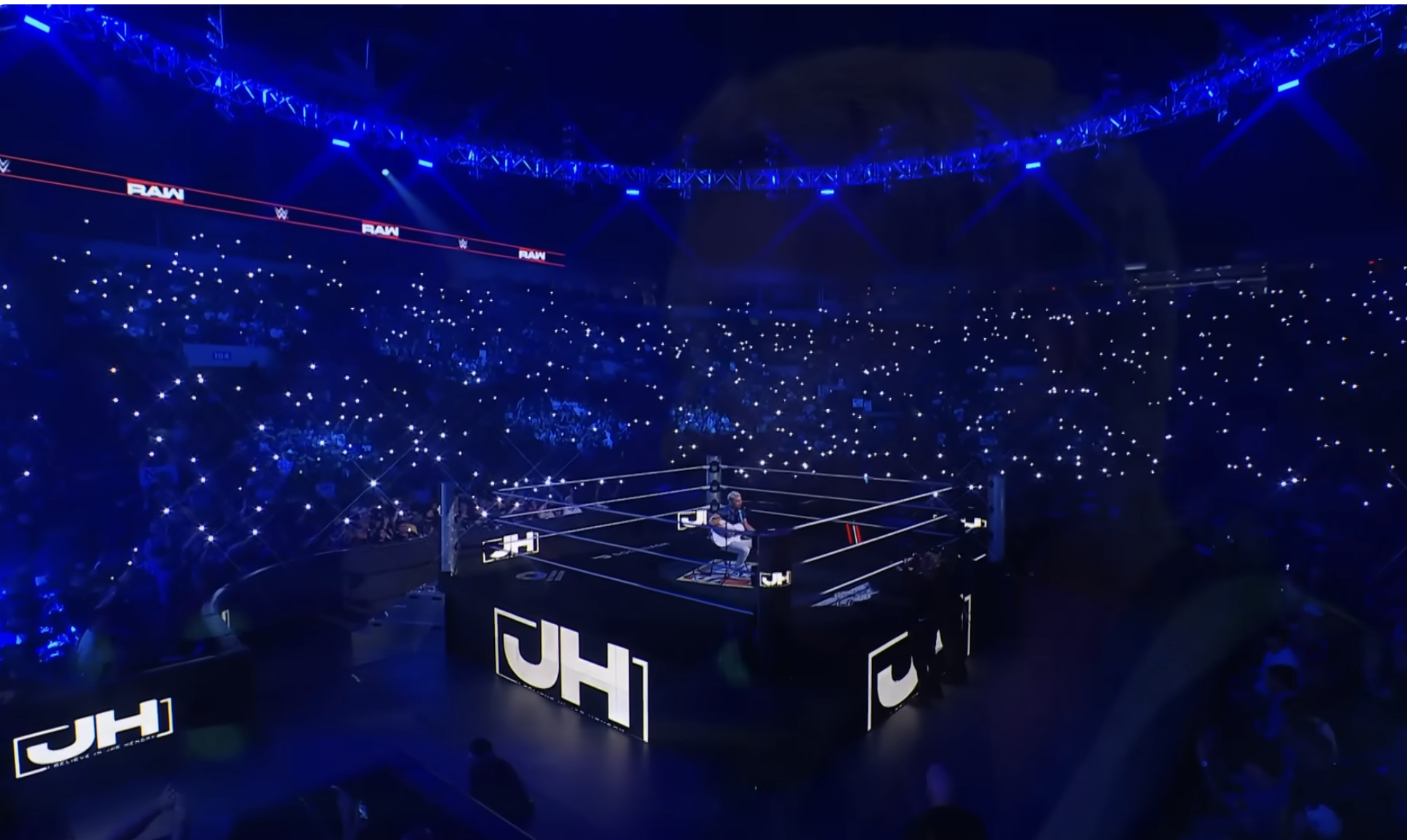
Joe Hendry joins WWE RAW (Netflix)
Mason Rook is another example.
He arrived in NXT with a character people could immediately understand, started getting television exposure, and then John Cena shared him with his own enormous audience.
Rook grew 24.98% that week.
I can't tell you how much of that was NXT, how much was the character, how much was Cena or how much was everything happening together.
And that's probably the more honest way to look at most of this.
The data isn't a controlled experiment.
But after eight months, it’s pretty hard not to notice what happens when wrestling talent gets put in front of more people.
3. Sometimes growth is a story
A great example - Jax Presley, a talent on WWE’s Evolve platform, which is kind of like their developmental’s developmental. Or…in baseball, the AA affiliate.
Jax came back after a torn pec muscle, then appeared on television, then actually wrestled, then teamed up with another guy into a tag team tournament on NXT (WWE’s AAA affiliate - one level up).
A few weeks earlier, Jax had 3,302 followers. By the end of September, he was over 5,000. There wasn't one giant Jax Presley moment I could point at and say, there it is. It just kind of built on itself.
Psycho Mike was similar in a completely different way. Mike has been around Canadian wrestling for years. And a new-ish promotion, Maple Leaf Pro Wrestling, put him on national television and started telling this increasingly strange story where he was hearing voices in his head.
Week after week it continued. Eventually we found out the voice was a different wrestler named Crazzy Steve. Then Steve attacked him, and our guy Psycho Mike started showing up in the rankings.
There are a lot of names like this - there’s a difference between a spike and momentum - or better put, a moment and a story.
What’s all this attention worth?
Anyway, what a fun thing to work on. There’s going to be a lot more to learn over time about what creates attention, what’s needed for attention to happen, and what it’s actually worth. Plus, there’s likely a whole product here for wrestlers, promoters, and fans. One person I talked to called it Pollstar for pro wrestling, and I’ve also heard Bandsintown. There’s follower mechanics and events, and lots more. So, it’ll land somewhere in the middle, I’m sure. I can see this type of tool in other verticals too - Substack, Cooking, any kind of talent-led, follower-based interest.
In the meantime, check out Nitro here, and tell me what you think: https://www.booknitro.com/