Inside NILGo: What the NCAA’s New Clearinghouse Actually Means for Real NIL Deals
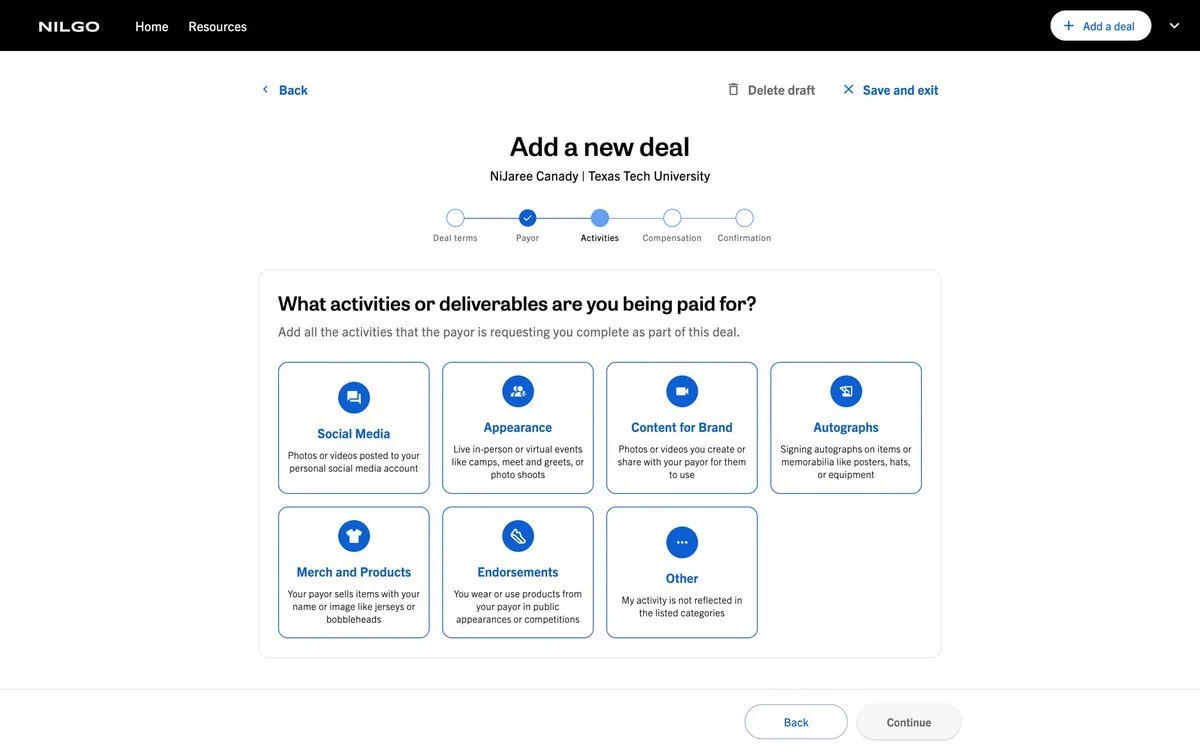
This month, we submitted our second NIL deal through the NCAA’s new compliance clearinghouse, NILGo. Our first submission? A major one: Nijaree Canady × Venmo, tied to Venmo’s Big 12 partnership.
After running a few deals through the system, here’s a clear look at how NILGo actually works — and what operators, agents, and brands need to know.
What NILGo Is (and Why It Exists)
Any NIL deal worth $600 or more now has to be cleared through a centralized online portal called NILGo, run by Deloitte.
On paper, its purpose is simple: Confirm fair market value and ensure athletes aren’t being exploited or paid under the table.
Whether you agree with the premise or not, this is the operating environment for 2025 and beyond. And if you’re serious about NIL — real campaigns, multi-month deals, national brands — NILGo is now the default.
How NILGo Actually Works
For agents, managers, or brand partners, here’s the real workflow:
Athlete creates an NILGo account
Athlete links you (the representative)
You submit the deal: contract, compensation, deliverables
Athlete receives an email + reviews what you submitted
Athlete hits “confirm”
The portal moves the deal into review
You wait for clearance
Our first approval took four business days. The backend feels very familiar — think Opendorse deliverables page, but with more administrative gravity.
Where the Friction Actually Shows Up
The mechanics are simple. The edge cases are not. Two things matter:
1. Timing: When You Submit vs. When You Sign
There’s still confusion around whether a deal needs NCAA clearance before signing or before payout.
To avoid issues, we’ve been doing this:
Submit a blank contract first
Get NILGo approval
Then fully execute the agreement
It’s clean, compliant, and defensible — but it can create tension when a brand is on a tight deadline.
Expect to build this buffer into your timelines.
2. Who You List as the “Client”
This one tripped us up early.
In the Venmo deal, we were working through their agency (shoutout David Benoit — pros make this easy). Naturally, we listed the agency as the contracting entity.
Wrong move.
Agencies typically can’t input brand-side tax information, which forced us to revise the submission and resubmit under Venmo directly.
Not catastrophic, but enough friction to slow a launch — and in NIL, timing is everything.
3. Timing Uncertainty
Once you’re in, you’re in, and there’s not a lot of feedback beyond “submitted for review.”
That means uncertainty for brands, agencies, clients if the system is overloaded. A four day review might end up being three weeks and you won’t know why. The old adage “time kills all deals” is true - delays introduce lots of different variables (new staff, change of mind, sales drop at the end of the quarter, an injury) which could kill the deal in the right circumstance.
Where NILGo Goes From Here
This system will mature. Deloitte will tighten the edges. Athletic departments will get clearer. But the headline is unchanged:
If you’re doing legitimate NIL business in 2025, NILGo is no longer optional.
Understanding it now creates real advantages:
Faster approvals
Cleaner compliance trails
Less risk for athletes
Less back-and-forth for brands
Fewer surprises for your legal team
We’ll likely see NILGo become the backbone of athlete income reporting, valuation benchmarking, and audit protection.
What’s Next
The Venmo campaign goes public soon, and it’s a strong signal of where high-end NIL is heading: National brands, conference integrations, and real creative investment around athletes.
More reporting and context here via Nicole Reitz and Sports Illustrated.
If you’re building in this space and want a straight, unvarnished read on NILGo or NIL compliance in general, reach out. The operators who understand this system early will win the next cycle.